Source Cable Termination Kit for Electric Wire, Housing, and Protection
Find 29 cable termination kit options for electric wire, housing, and wire protection. Compare specifications including voltage classes up to 35kv, materials like rubber and silicone, and certifications such as ISO and CE from suppliers in China.
Key considerations
Products List



Comprehensive Sourcing Guide
Strategic Sourcing Guide for Cable Termination Kits
Understanding Technical Specifications and Voltage Classes
When sourcing cable termination kits, the primary technical differentiator is the voltage class, which dictates the insulation requirements and physical dimensions of the components. Based on available market data, these kits are engineered for a broad spectrum of electrical environments, ranging from Low Voltage (LV) to Medium Voltage (MV) applications, specifically covering systems up to 35kV. Buyers must distinguish between kits designed for 8.7kV/15kV systems and those rated for the higher 35kV threshold, as the insulation thickness and stress control mechanisms vary significantly between these classes.
The conductor material is a critical component of the kit's integrity, with copper being the standard choice for the conductive elements due to its superior conductivity and tensile strength. The insulation materials used in these kits are equally diverse, with observations indicating the use of Rubber, Silicone Rubber, and Polyethylene (PE). The choice of insulation material often correlates with the specific application environment; for instance, Silicone Rubber is frequently utilized for its flexibility and resistance to environmental stress cracking, while PE offers robust dielectric properties.
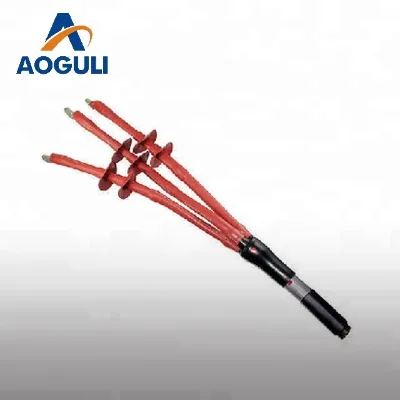
The physical configuration of the termination kits also varies. Some products are designed as single-core solutions, while others accommodate three-core configurations, providing versatility for different cable types. The shape of the housing is typically round, designed to fit standard cable geometries, and the color options observed in the market include Grey and Black. These aesthetic choices often serve functional purposes, such as UV resistance or visibility in specific industrial settings. Furthermore, the production process for these components often involves injection molding, a method that ensures high precision and consistency in the final product dimensions, which is vital for maintaining the IP rating and sealing capabilities of the kit.
Compliance, Certification, and Regulatory Standards
Navigating the compliance landscape is essential for any procurement of cable termination kits, as these components are integral to the safety and reliability of electrical infrastructure. The market data indicates a variety of certifications that suppliers may hold, including ISO standards and specific ISO9001 certifications, which validate the manufacturer's quality management systems. Additionally, CE certification is a common requirement, particularly for products intended for the European market, ensuring that the kits meet health, safety, and environmental protection standards.
Beyond general quality certifications, specific product certifications are crucial. Buyers should verify if the kits have passed Partial Discharge tests, a critical metric for high-voltage equipment that ensures the insulation system does not degrade under electrical stress. The data confirms that compliant products must demonstrate "Not Flashover and Not Breakdown" under impulse voltage conditions, a non-negotiable safety threshold for high-voltage applications.
The standards governing these products also vary by region and application. Some kits are manufactured to meet specific voltage standards, such as 20kV or 35kV, while others may be customized to meet unique project requirements. It is important to note that while some products adhere to general high-voltage standards, others may carry specific model-specific standards. Buyers must ensure that the supplier can provide documentation proving that the specific model number, such as those in the VLZ, VLJ, VLN, or VLW series, meets the relevant national or international standards for the intended installation location. The origin of the product, whether from Jiangsu, Zhejiang, or Suzhou in China, does not inherently determine compliance, but the supplier's ability to provide traceable certification for that specific batch is paramount.
Cost Drivers and Pricing Dynamics
The pricing of cable termination kits is influenced by a complex interplay of factors, including voltage rating, material composition, and customization requirements. The observed price range in the market spans from $0 to $170 USD, a wide variance that reflects the diversity of product specifications. Lower-priced items typically correspond to lower voltage classes or simpler configurations, while kits designed for 35kV applications with advanced insulation materials like Silicone Rubber command higher price points.
Material costs are a significant driver of the final price. The transition from standard rubber to specialized Silicone Rubber or the inclusion of high-grade copper conductors increases the base cost of the kit. Additionally, the production process plays a role; injection-molded components generally offer better consistency but may involve higher tooling costs, which can be amortized over larger orders.
Order volume is another critical factor. The Minimum Order Quantity (MOQ) observed in the market ranges from as low as 1 unit to as high as 100,000 units. Buyers purchasing in bulk can often negotiate more favorable pricing structures, whereas those requiring small quantities for pilot projects or maintenance repairs may face higher per-unit costs. Customization is a major cost variable; while standard kits are readily available, bespoke solutions involving specific dimensions, colors, or performance characteristics will incur additional engineering and production expenses. Buyers should also consider the packaging costs, as standard export cartons are common, but specialized packaging for fragile or high-value items may add to the overall expense.
Typical Applications and Operational Environments
Cable termination kits are designed for a wide array of applications, primarily focused on the safe termination of electric wires and cables in various electrical systems. The core function of these kits is to provide insulation and protection, ensuring that the electrical connection is secure and that the cable is shielded from environmental hazards. The classification of these products as "Cable Termination Accessories" underscores their role in completing the electrical circuit while maintaining system integrity.
In industrial settings, these kits are frequently used for housing and protecting terminal connections in power distribution networks. The application of these kits extends to wire and cable protection, where they serve as a barrier against moisture, dust, and mechanical damage. The IP rating, often associated with materials like PVC or Rubber, indicates the level of protection against solid objects and liquids, which is vital for outdoor or harsh industrial environments.
The versatility of these kits allows them to be used in both LV and MV systems, making them suitable for a broad range of infrastructure projects, from commercial buildings to industrial plants and utility substations. The "Terminal" and "Housing" designations highlight their specific roles in connecting conductors and protecting the termination point. Whether the application requires a 20kV or 35kV solution, the kit must be selected to match the specific voltage class and environmental conditions of the installation site.
Supplier Evaluation and Geographic Considerations
Evaluating suppliers for cable termination kits requires a thorough assessment of their capabilities, particularly regarding their geographic location and production capacity. The market data indicates that a significant portion of these products originates from China, with specific manufacturing hubs identified in Jiangsu, Zhejiang, and Suzhou. These regions are known for their robust manufacturing ecosystems and expertise in electrical components.
When selecting a supplier, buyers should verify the supplier's ability to provide consistent quality across different batches. The presence of ISO9001 certification is a strong indicator of a supplier's commitment to quality management, but it should be complemented by evidence of specific product testing, such as partial discharge and impulse voltage results. Buyers should also inquire about the supplier's customization capabilities, as the market data suggests that customization is available for many products. This flexibility is crucial for projects with unique requirements that standard off-the-shelf kits cannot meet.
Furthermore, the supplier's lead time and logistics capabilities are important factors. While specific lead times are not provided in the data, the MOQ range suggests that suppliers are equipped to handle both small and large-scale orders. Buyers should ensure that the supplier can meet the delivery schedule required for their project timeline. The packaging method, typically standard export cartons, should be evaluated to ensure it provides adequate protection during transit, especially for high-value or sensitive components.
Quality Control and Long-Term Procurement Considerations
Ensuring the long-term reliability of cable termination kits requires a rigorous quality control (QC) process. Buyers should demand detailed test reports that verify the kit's performance under specified conditions, including partial discharge levels and impulse voltage resistance. The observation that compliant products must pass "Not Flashover and Not Breakdown" tests under impulse voltage is a critical benchmark for quality.
Long-term procurement considerations also involve the availability of spare parts and the supplier's ability to support the product throughout its lifecycle. Since these kits are often critical to the operation of electrical systems, downtime due to component failure can be costly. Therefore, buyers should prioritize suppliers who offer robust after-sales support and have a track record of delivering consistent, high-quality products.
The classification of the product as a "Cable Termination Kit" or "Cable Termination Accessories" should be matched with the specific needs of the application. For instance, kits with a "Type_Cable Termination Kit" certification may be better suited for specific high-voltage applications than generic accessories. Buyers should also consider the environmental impact of the materials used, as certifications like Osi RoHS indicate compliance with restrictions on hazardous substances, which is increasingly important in global supply chains.
Summary of Key Product Attributes
To facilitate a comprehensive comparison of available options, the following table summarizes the key attributes observed in the market for cable termination kits. This overview highlights the diversity in specifications, materials, and certifications that buyers must navigate.
| Attribute Category | Observed Values / Options |
|---|---|
| Voltage Class | LV & MV (up to 35kV), 8.7kV-15kV, 20kV, 35kV |
| Conductor Material | Copper |
| Insulation Material | Rubber, Silicone Rubber, PE, PVC |
| Color Options | Grey, Black |
| Number of Conductors | 1 Core, 3 Cores |
| Shape | Round |
| Certifications | ISO, ISO9001, CE, Osi RoHS |
| Production Process | Injection Molding |
| Origin Locations | China (Jiangsu, Zhejiang, Suzhou) |
| Packaging | Standard Export Carton, Carton |
| Customization | Available |
| Key Performance | Pass Partial Discharge, No Flashover/Breakdown |
By carefully analyzing these attributes and aligning them with specific project requirements, buyers can make informed decisions that ensure the safety, reliability, and efficiency of their electrical installations. The complexity of the market necessitates a methodical approach to sourcing, focusing on verified specifications and proven supplier capabilities rather than assumptions or unverified claims.
FAQs
What voltage classes do cable termination kits support?
These kits support Low Voltage and Medium Voltage classes up to 35kV. Specific models are rated for 8.7kV to 15kV or 20kV systems, ensuring compatibility with various electrical infrastructure needs.
Which insulation materials are used in these kits?
Common insulation materials include Rubber, Silicone Rubber, and Polyethylene. The choice depends on the application, with Silicone Rubber offering flexibility and PE providing robust dielectric properties.
Can I find cable termination kits with ISO9001 certification?
Yes, many suppliers offer kits with ISO9001 certification to validate quality management systems. Additional certifications like CE and Osi RoHS are also available for specific regional and environmental compliance.
How many conductors are available in these kits?
Kits are available with either one core or three cores to suit different cable types. This configuration flexibility allows for versatile installation in various electrical distribution networks.
What is the typical price range for these kits?
The observed price range spans from 0 to 170 USD depending on specifications. Higher voltage ratings and specialized materials like Silicone Rubber generally command higher price points within this range.
Where are these cable termination kits manufactured?
Manufacturing origins include Jiangsu, Zhejiang, and Suzhou in China. These regions are known for robust manufacturing ecosystems capable of producing high-voltage electrical components.
What is the minimum order quantity for these kits?
The minimum order quantity ranges from 1 to 100,000 units depending on the supplier. Bulk purchases often allow for more favorable pricing structures compared to small pilot orders.